what was the first animal on earth is indeed a question that has held the attention of all who have enquired into it for centuries; and the process itself is obviously rather complex, if not difficult: but with the help of research, fossils, and the study of modern creatures, scientists are now able to come up with quite an informed view regarding what was possibly the first animal to inhabit our planet.
The Origin of Life on Earth
Even before animals emerged, life existed on Earth in its primitive forms. The first life forms were simple one-cell divisions, like bacteria and other microscopic forms of life. These little things were building blocks for the more complex forms which were to come later. Life evolved over billions of years and became more diverse until, at last, animals emerged.
Three points eight billion years ago is when life on earth is known to have its first emergence. Although simple by modern standards, the organisms then were still living things. They survived by obtaining their sustenance from light, or from other surrounding chemicals.
The Rise of Multicellular Life
Then, after a while, single-celled organisms started to be progressive and the first organisms towards multicellular life began to appear. It had been a major step further towards making animals. Multicellular organisms are those made of many small cells and work with each other to perform different functions like gathering food, moving or reproducing. This is at variance from the thousands of years when single-celled organisms had dominated the world.
The earliest multicellular life forms were simple organisms like algae, fungi, and some kinds of higher sea plants. They did not yet possess animal characteristics such as moving or hunting for food. However, these simple forms over time would give rise to more complex forms.
The Emergence of Animals
The first animals appearing on Mother Earth were most likely simple soft-bodied creatures thriving in ocean waters. The early forms of these creatures would have been vastly different from what we see today. They probably had simple cells with a few working bodily functions, without bones or complex organs.
One of the earliest animals known to exist is a creature called Spongia, commonly called a sponge. Sponges are really simple animals surviving today. They have no nervous system, muscles, or organs. They filter food from water and possess the most rudimentary structures to gain sustenance. Fossil records suggest that sponges may have appeared as early as 700 million years ago.
Importance of the Ediacaran Period
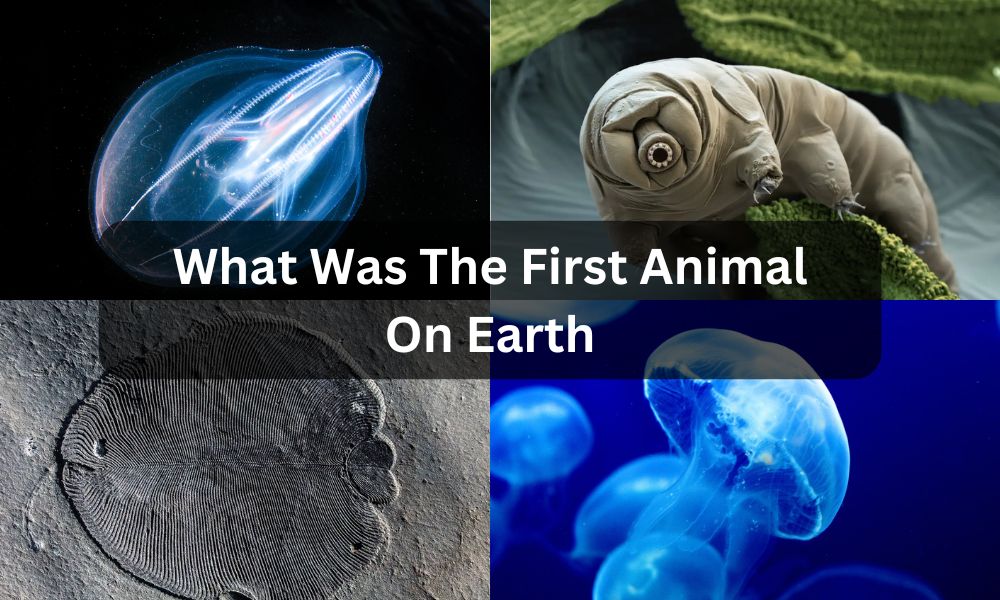
The Ediacaran Period is the prime time of the history of life on planet Earth, occurring from approximately 635 to 541 million years ago. It was during this time that several early complex animals began their evolution. The fossils dated to this period show soft-bodied creatures that often conformed to simple flat disc or frond-like shapes.
These creatures were among the first ones to have some characteristics of animals, including movement or being able to respond to their environment.
Nevertheless, the Ediacaran animals were vastly different from modern animals. They had no solid shells, bones, or the complicated assemblages we now associate with animals. But they were precursors to the mighty explosion of life in the Cambrian Period that followed.
Cambrian explosion
The Cambrian explosion is that event and time ported to a corner because 541 million years ago it became one of the cornerstones of Earth’s life history. It was a time during which life forms diversified to an unprecedented degree and during which many new types appeared. The Cambrian explosion is effectively the memorable moment in the history of animals when they began becoming something recognizable even in forms which we see today.
The earliest animals from this time were small marine ones, such as proto-types of worms, insects, some crustacea, and mollusks such as snails and clams.
These animals were characterized by hard bodies and shells, and other features that may protect their life from the predators.
Some scientists believe that the first true animals (sponges and jellyfish) might have originated before the Cambrian explosion, yet the rapid evolution of new species during this time is really a watershed in the evolution of animals.
The First Animal: What Was It?
It is not easy to say what the first animal was, as much evidence is not exactly clear. According to recent studies, sponges are actually some of the first animals that have occupied the earth. The explanation is that sponges are very primitive and possess a lot of similarities with the earliest life forms. These beings form a colony and are multicellular in nature, but they lack the complex parts most other animals have.
On the other hand, a possibility is that the first could have been just simple creatures like jellyfish or any other primitive ocean animal. These animals are also simple but have a much more advanced structure than sponges. However, evidence suggests that sponges were mostly the first to pop up.
The Gradual Process of Animal Evolution
The evolution of animals was not an overnight process, nor was it a simple one. It was a gradual evolutionary process spanning millions of years. Animals slowly made changes to their structures and behaviors. Eventually, these alterations made them more viable in the environment in which they lived, found food, and reproduced.
New features emerged among animals, such as hard shells for protection, as well as a more varied nervous system helping them make better responses to their surroundings. Those changes resulted in all of the forms of animals we see now: from tiny insects to very large mammals.
Evolution gave rise to new habitats for animals. Some animals adapted to land, while others were in the ocean, and some finally ended up living in the air. Natural selection, whereby only those animals that suit their environment survive and reproduce, also provided an important impetus to these changes.
The Search for the First Animal: Ongoing Studies
Of the first animals, much evidence could be uncovered, but still a long way to go. Fossil records are incomplete, and many early forms of life did not leave an evidence trail for us to study today. Advancements in modern technology are creating new ways to study ancient organisms. DNA testing and other instruments can now be used in the study of extinct life forms and how they relate to modern organisms.
Continuing the study of the distant past might lead to even richer finds concerning the first animals on earth. Such discoveries might also be significant in clarifying how life began on our planet and how animals became such diversely different creatures from what we see today.
Conclusion
So the answer to the question about what was the first animal on earth then the very first animal on Earth must have been some simple, multicellular organism, perhaps some sponge or similar creature. Such an organism lived in the oceans some 600 million years ago and opened a long path that led to all different forms of animals existing now. Scientists are still exploring the origins of life and the initial animals of Earth. Through the study of fossils and modern present-day creatures, more evidence is gathered regarding the evolution of life and the origin of the first animals.